
Brought to you by
Norwich Pagan Sphere
|
|
Brought to you by
|
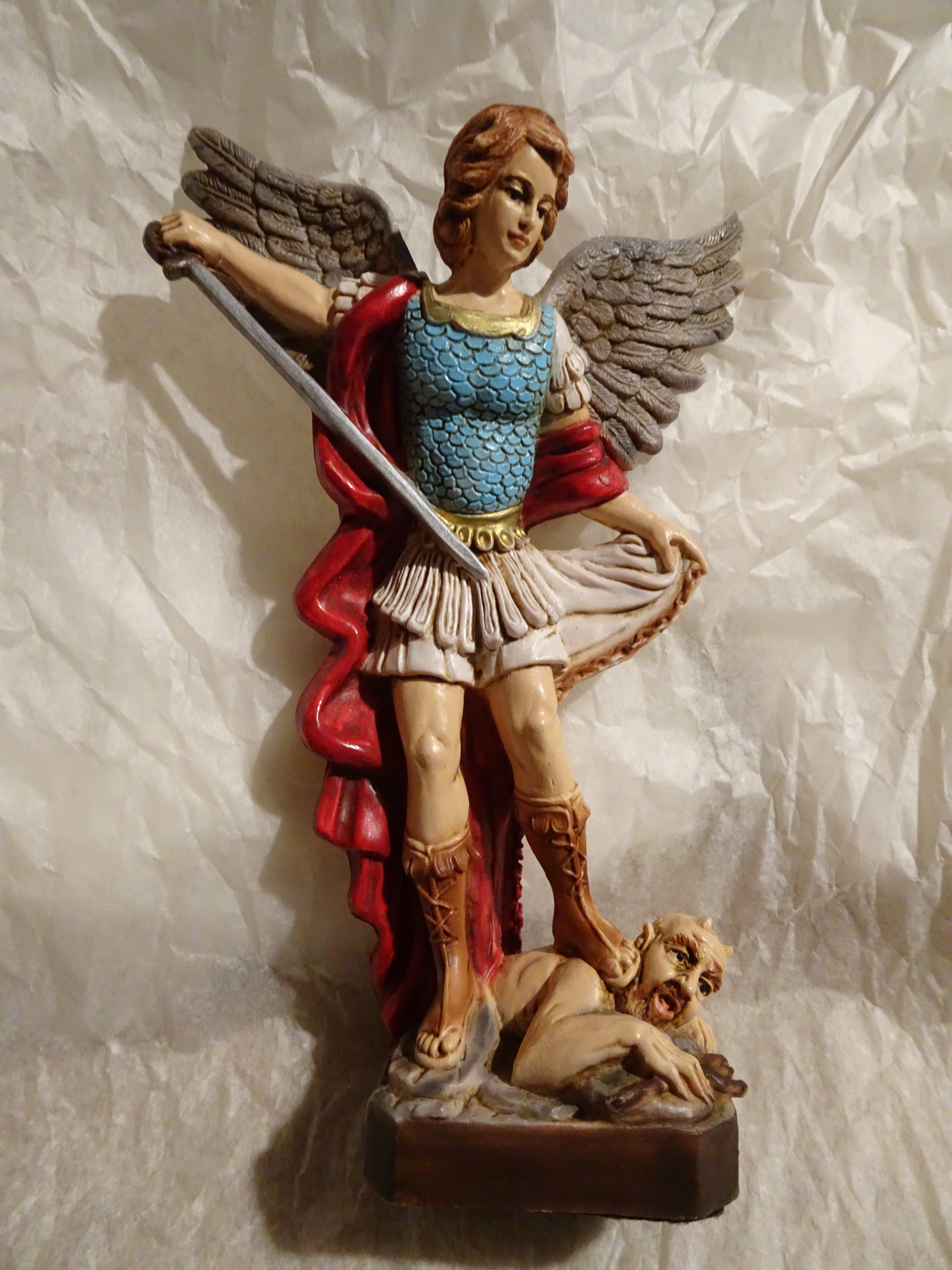
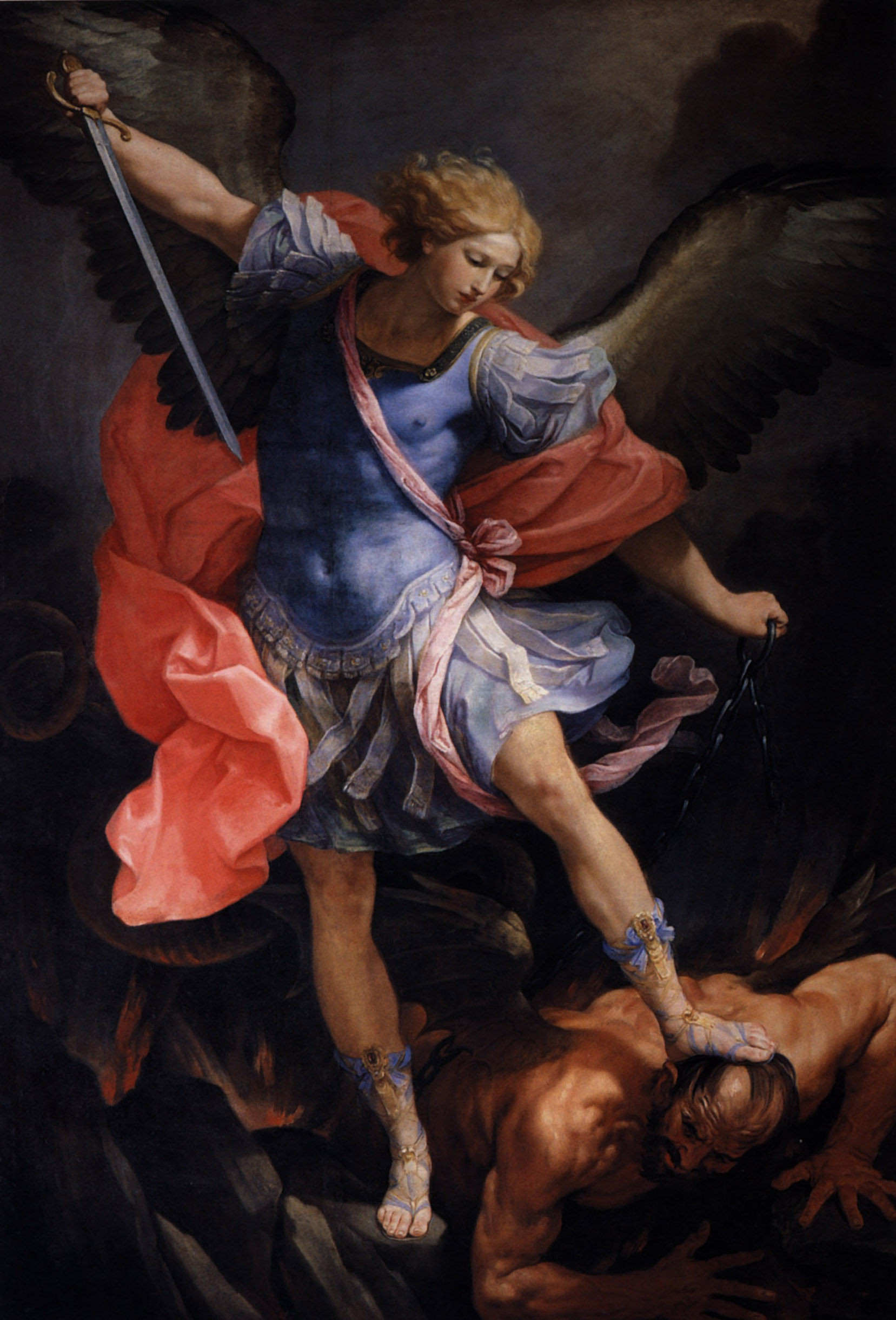
This striking figure is, on one level, a typical representation of St Michael subduing Satan (although the latter is often shown as a dragon). What is unusual is that St Michael is clearly female, seen in the feminine face and hair, the pronounced breasts in the armoured chest plate, the representation of the skirt as a woman’s skirt and the muscular, but quite feminine arms and legs. In this it enhances the imagery seen in a painting, on which it would appear to be based, by Guido Reni from c. 1630-1635, Michael Defeats Satan (below, PD Yorck Project). The figure’s skirt-holding seems to be based on Michael’s left hand in the painting, which is holding the chains restraining Satan. On the other hand, the material held out is actually part of the red cloak, but formed and coloured to match the skirt, which could imply an accident with the application of colour or a deliberate merger of the two garments.
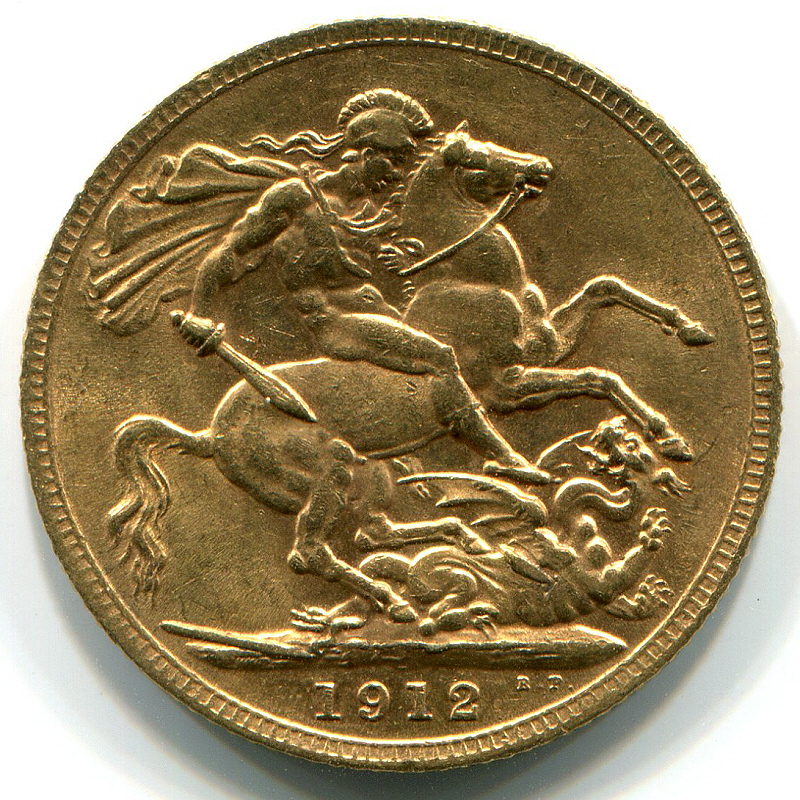
Iconographically, St Michael is readily distinguished from that other, conflicted, dragon-slaying saint, George (above), by the fact that Michael (below, in Norwich Anglican Cathedral) has angel’s wings (being an archangel), George is often on Horseback and (perhaps crucially) Michael has usually despatched the dragon, whereas George is in the act of doing so – or perhaps pinning it.
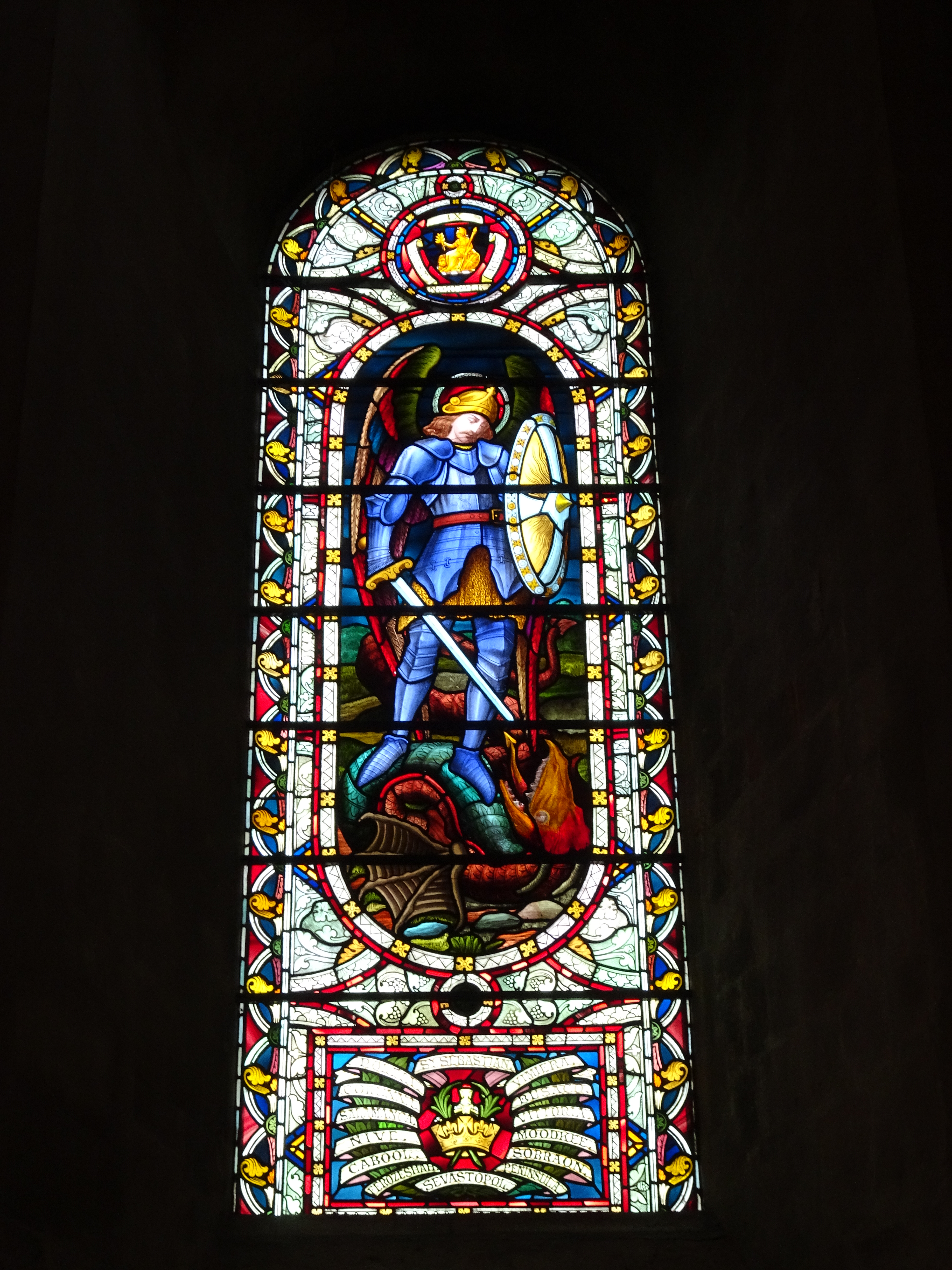
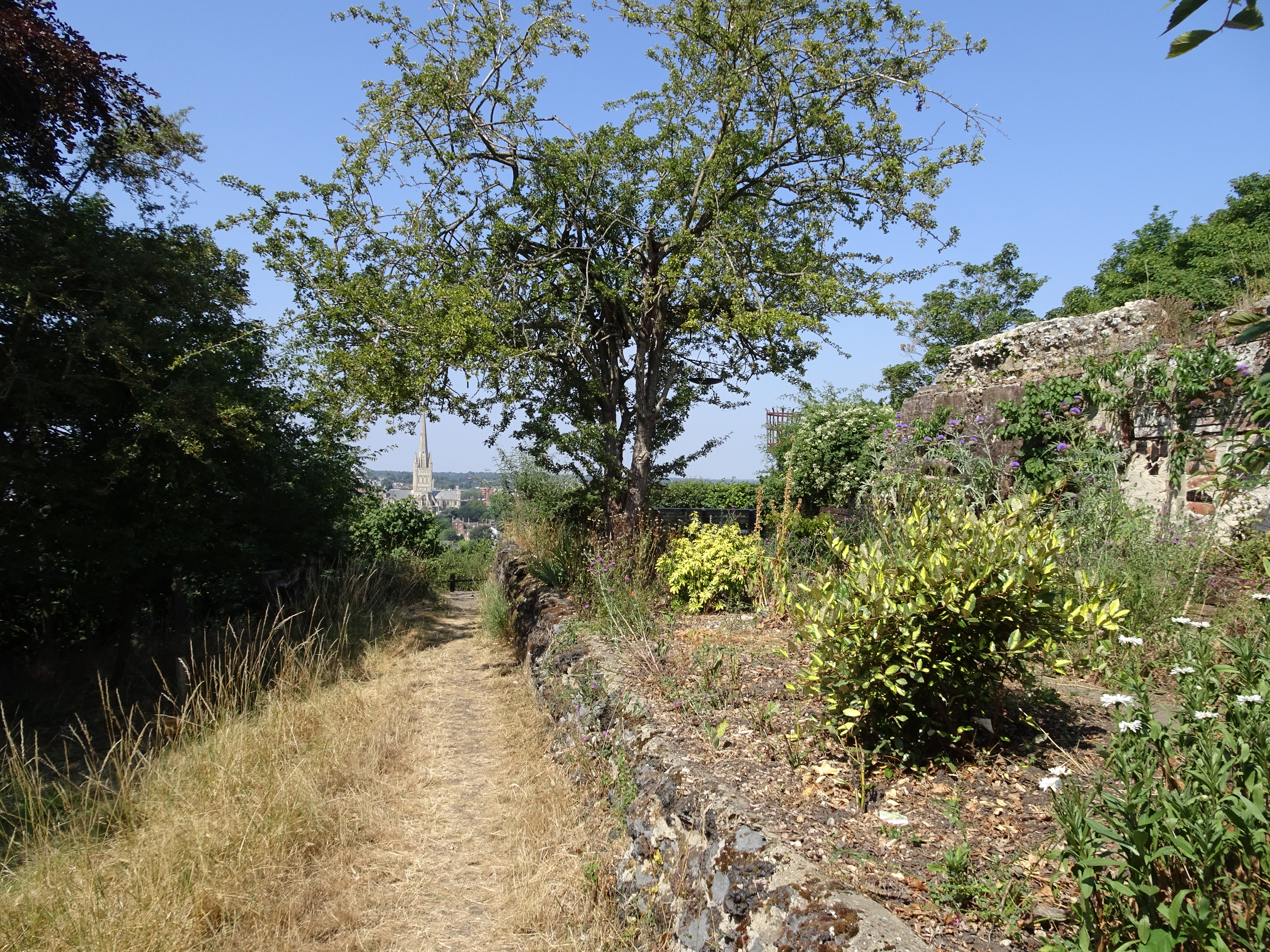
St Michael is associated with high places, suggesting a link to the Heavens, but also strategically significant locations. When Norwich Cathedral was built by the Normans, a church dedicated to St Michael on Tombland (the Anglo-Danish market place; perhaps to watch over mercantile and other sins?) was removed and rebuilt as St Michael’s Chapel on the hill overlooking the city on the East side of the river Wensum. It became a centre of the rebel camp in Kett’s Rebellion in 1549 and, indeed, the area around it is today an important green space, called Kett’s Heights (below).
Indeed, Michael is an archangel whose name is suggestive of being, in effect, part of the Godhead (a rhetorical, ‘who is like God?’) and is etymologically tied to the name Michal/Mikal – a common Hebrew female name, meaning a stream. Likewise, Michael, despite being the leader of the angelic army, not only has aspects of Lucifer, being an angel of light, enlightenment and technical progress, but is also associated with the feminine spiritual force of the Shekinah or Holy Spirit, “the female manifestation of God in man” and "liberating angel" (Davidson, 1967, p. 272).
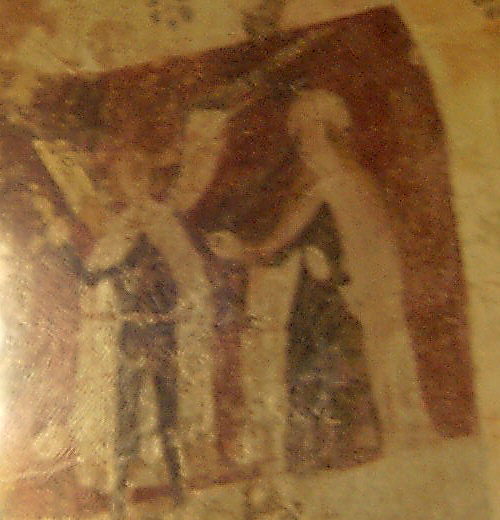
Furthermore, Michael came to stand for the figure of judgment in Christianity and, via the Coptic Church, replaced Anubis as psychopomp in the ancient Egyptian scene of the weighing of the heart of the deceased against the feather of Ma’at, where also Hathor, as receiver of the justified soul, is replaced by Mary the Virgin. A wall painting of this scene is still extant in, amongst other places, the church of St Mary in Kempley, Gloucestershire (above). As well as being a storytelling device, such murals have also been used, across the continent, to mark boundaries in the sacred space of a church, with arches flanked on one side by St Michael and his scales, on the other by Mary and her mantle (Mihail, 2025). Indeed, the flowing, billowing cloak of our St Michael figure and, especially, Reni’s painting perhaps suggest a merging of the figures of Michael and Mary. The garment held out in the left hand, at the same time both skirt and mantle, could be a manifestation of this duality.